
While in the case of bigger cars, the industry wants the distortion with smaller cars and the tax differentials to be narrowed, it wants duties to be reduced from 24%-27% to a uniform 22% irrespective of size of the vehicle and its engine displacement.

Analysts agree China, Greece and US Fed developments need careful monitoring but India should gain, over time, from relative rise of the dollar and fall in commodity prices.

Retail inflation hit an eight-month high of 6.07 per cent in February, remaining above the RBI's comfort level for the second month in a row, while wholesale price-based inflation soared to 13.11 per cent on account of hardening of crude oil and non-food item prices, government data showed on Monday. The previous high for retail inflation was 6.26 per cent in June 2021. The consumer price index (CPI) based retail inflation, which is taken into account by the Reserve Bank of India (RBI) while deciding its monetary policy, rose mainly because of costlier food items, as per the data released by the National Statistical Office (NSO).

With auctions unable to proceed, the median onion price declined 17 per cent or Rs 6 a kg to trade at Rs 30 a kg on Monday, with arrivals of around 500 tonnes.
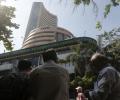
Paring its early gains, benchmark BSE Sensex fell by 304 points on Wednesday as investors booked profit after recent gains amid concerns over inflation and supply constraints. Despite a firm start, the 30-share BSE barometer declined by 304.48 points or 0.53 per cent to settle at 57,684.82. During the day, it tanked 420.71 points or 0.72 per cent to 57,568.59.

India's factory output climbed 22.4 per cent in March, benefiting from the base effect of the lockdown-marred month a year back as well as a turnaround in the manufacturing sector, while retail inflation slipped to a three-month low of 4.29 per cent in April. The high positive annual growth in the index of industrial production (IIP) in March 2021 came on back of a contraction of (-)0.9 per cent and (-)3.4 per cent in January and February 2021 respectively, according to the data released by the National Statistical Office (NSO) on Wednesday. This turnaround was led by recovery in the mining, manufacturing and electricity sectors.

The current up move, according to analysts, closely resembles the rally post the global financial crisis in 2008-09, not just in quantum and speed, but also the way small-and mid-cap indices outperformed large-cap peers.

Amid rising global commodity prices and high inflation, the government is likely to scale down India's GDP growth projection for the 2011-12 financial year next month from 9 per cent estimated in February, chief economic advisor Kaushik Basu on Friday said.

Gold touched a all-time high of at Rs 18,550 per 10 gm in the bullion market on Thursday, then slipped a tad to end at Rs 18,210. Pure gold (99.9 purity), however, closed unchanged at at Rs 18,310 per 10 gm.
"I am aware that many of you are concerned about the prices of certain essential commodities. To some extent, we will get some relief from the beneficial effects of our initiatives to increase agricultural output. However, we must keep in mind that global prices of basic food commodities have seen a rapid rise for a variety of factors. We do not have any control of these factors," Prime Minister Manmohan Singh said at a day-long AICC session in New Delhi.
Congress president Sonia Gandhi has said the government must ensure that the prices of essential commodities remain affordable for the aam aadmi (common man). In a 'Letter to Congresspersons' in the latest issue of the party mouthpiece, she also put the onus of controlling price rise on the state governments, saying they should strengthen the public distribution system and control black marketing and hoarding.

In the coming few weeks, agriculture markets in North and Central India will be full of wheat, mustard, and chana - the three main rabi crops grown in these parts. Not only will the price trajectory of these determine the course of food inflation in the months to come, but it could also have a wider impact on the rural economy in the main growing states for these crops. Wheat and chana are largely grown in Madhya Pradesh (MP).
According to USDA estimates, the US accounted for an average of 11.5 percent of world exports of rice for calendar years 2004 through 2007 and is projected at 12.7 percent for 2008. US exports will increase to 3.5 million metric tons while world total exports decline to 27.5 MMT. The largest rice exporter is Thailand at 9.0 MMT for 2007/08, 32.7 percent of world exports, down 0.5 MMT from 2006/07 and up from 7.3 MMT in 2004/05 and 2005/06.

India's economy continues to be robust, but downside risks such as rising crude oil prices, adverse weather conditions, and the global banking crisis outweigh the upside potential in gross domestic product (GDP) growth in the current financial year (FY24), the finance ministry said on Tuesday in its Monthly Economic Review for March. "We reiterate that downside risks to our official forecast of 6.5 per cent for real GDP growth in FY24 dominate upside risks," the review said. "Opec's surprise production cut has seen oil prices rise in April, off their lows of low-seventies per barrel in March.
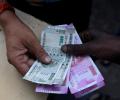
'As long as economic growth remains steady, creating jobs and generating stable incomes, the rise in home loans should not create problems.' 'If the growth trajectory changes course over the medium term and interest rates rise along with inflation, the expanding trend in home loans may not sustain.'

'The growth drivers are mostly invisible, but the growth is undeniable at least for now,' notes Debashis Basu.

'For the next two years, we expect the bulk of earnings growth contribution from sectors like financials and energy, where the outlook remains positive, while the sectors which are linked to domestic consumption and are currently witnessing strains on margins have low salience for Nifty earnings.'

In the past month, wheat prices have increased 6.3% as production is expected to be 1.5% lower, in terms of crop acreage, than the earlier estimate

According to the Icra report, earnings before interest, tax, depreciation and amortisation margin of its sample declined by 44 basis points on a YoY basis and 23 basis points on a quarter-on-quarter basis to 16.6 per cent.

The global economy weakened in the second quarter of 2011, as growth moderated in both advanced and emerging market economies under the impact of high oil and other commodity prices.

India, along with Southeast Asian countries such as Indonesia, is expected to sustain growth in the medium-term in Asia region, replacing China as the key growth driver, Morgan Stanley and Nomura said in two separate reports released on Monday. While Morgan Stanley projected a 6.2 per cent gross domestic product (GDP) growth forecast for India in FY24, Nomura estimated the Indian economy to grow at 5.9 per cent in 2023. "Even with a slowing China, we expect GDP growth in Asia to sustainably outperform other emerging markets and the US. India and Southeast Asia are set to be the fastest-growing economies this decade.

The global economy is projected to expand by 4.2 per cent this year, but rising oil and commodity prices and European debt crisis could hurt the overall recovery, according to Paris-based think-tank OECD.

Enthused by higher than expected GDP numbers in the fourth quarter of 2022-23, Chief Economic Adviser (CEA) V Anantha Nageswaran on Wednesday said India's economic growth may exceed the initial estimate of 6.5 per cent in the current fiscal and the country can look for another year of solid economic performance.

Any shift in investor sentiment may result in speculators fleeing the gold market, driving its price down sharply, quickly. One significant risk for gold is a near-term reversal in the dollar, which recently fell to a two-year low.
A survey by five brokerage houses -- SBICap Securities, Angel Broking, ICICI Securities, Motilal Oswal and HSBC Securities -- reveals that after a volatile calendar year which saw input costs rise to record levels in the first half and then fall dramatically in the second half, FMCG companies will now see the benefit, as it usually takes a quarter for falling costs to show in the results.

The biggest headwind to the consumption story in FY23 is a sharp decline in government subsidies on food, fertiliser and fuel, and overall decline in revenue expenditure net of interest payments. This, analysts say, will adversely impact purchasing power of households at the lower end of the income pyramid, translating into lower spending on consumer goods and services.

Since their highs in September, chemical stocks have underperformed the benchmarks and broader indices over the past month with larger players witnessing a 9-22 per cent fall during this period. Expectations of weak September quarter results amid high inventory, demand woes and weak realisations have led to the underperformance.

Any government support or incentive to help exporters deal with high freight and insurance costs is unlikely.

Inflation in food articles during May stood at 1.13 per cent, as against 2.55 per cent in April.
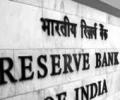
With inflation likely to rise further, the Reserve Bank may go in for an another hike in the key policy rates in its fourth quarterly Review, slated to be announced on January 25.

These stocks offer the best combination of maximum 'buy' recommendations from brokerages and share price upside over the next 12 months.

With retail inflation witnessing significant uptick in May, the Reserve Bank of India (RBI) is likely to maintain status quo in its August monetary policy review, according to a report. According to the SBI's research report- Ecowrap, inflation may remain elevated in the coming months due to several global and domestic factors. "We expect a status-quo in August. We believe RBI would still try to find a marriage of convenience of regulatory and developmental measures and monetary policy in August policy," the research report said on Wednesday.
The combined desk-based and mobile PC market in India totalled nearly 2.5 million units in the April June quarter, a 2.5 per cent increase over the same quarter last year.

Finance Minister Nirmala Sitharaman has said the recent interest rate hike by the Reserve Bank was not surprising for her but the timing was, asserting that the rising cost of funds will not impact the government's planned infrastructure investments. For the first time since August 2018, RBI had on May 4 delivered a blunt 40 basis points increase in key repo rate to 4.40 per cent, and also hiked the cash reserve ratio by 50 basis points to 4.5 per cent after an unscheduled meeting of the rate setting panel, citing increased inflation pressures following the Ukraine war and the resultant spike in crude oil prices. Retail inflation printed at 6.9 per cent in March and the April reading is forecast to top 7.7 per cent.

RBI lowers GDP forecast for FY16 to 7.4%

The early-bird results for the April-June quarter of 2024 (Q1FY25) hint at a slowdown in corporate revenues and profits in FY25. Corporate profits might face headwinds from a continued revenue growth slowdown and a reversal in margin gains from lower commodity and energy prices in FY24. The combined net profit (adjusted for exceptional gains and losses) of the 210 companies that have declared their Q1FY25 results so far is down 4.2 per cent from the year-ago period - their worst showing in seven quarters.

The revised salaries of central government employees are likely to be paid from July 1, 2016.

Gold prices are set to drop further in the domestic market, owing to the rupee's appreciation.
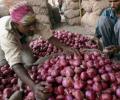
The government on Saturday imposed a 40 per cent duty on the export of onions to increase domestic availability amid signs of increasing prices. The export duty, which is the first time ever on onion, has been imposed as the retail sale price of the kitchen staple, according to government data, touched Rs 37/kg on Saturday in Delhi. The finance ministry through a Customs notification imposed a 40 per cent export duty on onions till December 31, 2023.
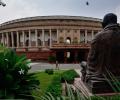
Watch all the action from both House of the Parliament.
